
How to make an esports team
Last updated 29 September 2026
Most guides to starting an esports team begin with a logo, a website and a sponsor deck. An amateur team begins with four people who can play on Thursday night and need a fifth.
This guide is for whoever is putting that team together: a player building a stack for their game's team tournament, a league or scrims, one to three players short. If you're founding an organisation with staff and sponsors, this isn't that guide. It covers deciding what the team is, recruiting for the roles you're missing, running tryouts, setting the team up in your game's format, finding scrims and keeping the roster together.
In short
- Decide the format, the night you play and a rank range before you recruit. On TeamTavern, a group's rank range is typically about a tier and a half wide.
- Name the roles you're missing, not every role. Players have posted about ten times as often as groups on TeamTavern, so message the players who fit rather than waiting.
- Put every candidate through the same tryout, in a real scrim.
- Learn your format's roster rules before your first match. In Valorant Premier, a teammate you remove after that match may not be able to come back.
- Write down who decides what, and how someone leaves.
Decide what the team is before you recruit
Settle the format, the night, the rank range and the language before you post anything. Every post you write and every tryout you run depends on them, and a player can't judge a team that hasn't decided.
The format. Pick what the team is for: Valorant Premier, League of Legends Clash, the Dota 2 Battle Cup, ESEA in Counter-Strike 2, the FACEIT leagues in Overwatch, Siege Cup or the Challenger Series in Rainbow Six Siege, the ALGS Challenger Circuit in Apex Legends, ETF2L or RGL in Team Fortress 2, or scrims only. The formats differ in how often they play, what they ask of each player's account and where they lead. The guide to joining a team covers each game's team format, so this one doesn't repeat it.
The night. Pick one or two fixed evenings, with a start time and a time zone. A team that can't agree on a night isn't a team yet, and players look for posts whose hours match their own.
The rank range. Players look for a team near their own rank. Among group posts on TeamTavern that give a range, the typical width is five steps in Valorant, such as Gold 1 to Platinum 3, and six in League of Legends, such as Gold IV to Platinum II (the median, counted 29 September 2026). That's about a tier and a half, and it's a sensible default. A wider range lets more players reply, and puts a wider spread of skill inside the team.
The language. Name the one language the team speaks on voice.
Recruit for the roles you're missing
Name the roles you're missing, not every role. A player reads a group post to find out whether they fit, and a post that asks for everything tells them nothing.
A group post that gets answers says:
- how many players the group has and how many it wants, such as "3 players, want 2 more"
- the missing roles, and only those
- the rank range
- that a microphone is required, if the team plays on voice
- the hours you play, and your region and language
- "Scrims and tournaments", or your game's own format, under "Looking for"
Then add two or three sentences about the team: what it's aiming for this season, who calls, and what it's like to play with.
Many group posts leave some of this out. The chart compares how often group and player posts on TeamTavern give each answer.
- A rank or rank range
- Group posts: 88%
- Player posts: 82%
- Some roles, not every one
- Group posts: 50%
- Player posts: 71%
- Microphone
- Group posts: 79%
- Player posts: 87%
- Hours online
- Group posts: 53%
- Player posts: 56%
- A written description
- Group posts: 84%
- Player posts: 82%
Groups state their rank range more often than players state their rank, but they're vaguer about roles and voice:
- Roles: half of group posts name some roles but not every one, against 71% of player posts. Of the group posts that answer the role question, 30% tick every role and only 52% name one or two.
- Voice: one group post in five doesn't say a microphone is required. If your team plays on voice, say so.
- Hours: almost half of group posts give no hours, about as many as player posts. Give yours.
Don't only wait for replies. Since 2019, players have put up 26,840 posts on TeamTavern and groups 2,538, more than ten to one. The players who fit your team may already have posted, so filter the feed for your rank and role and message them.
Expect the scarce roles to take longer. Some roles are asked for far more often than they're offered. The chart in the join guide shows them: support in Counter-Strike 2 (68% of groups ask for it, 38% of players offer it), mid in Dota 2 (67% against 40%), and top and jungle in League of Legends. The common roles fill first. For a scarce one, say what the team offers that player: a regular slot, their main role rather than a fill, or someone else making the calls.
Run a tryout that tells you something
Put every candidate through the same tryout: a short voice call, then a scrim or a few games together at the team's usual time, then a trial week of the normal schedule if both sides want it. Trying people the same way is what makes them comparable.
Test what the team needs:
- The role: have them play the role you're recruiting for, not their best one.
- Their calls: a review of 92 studies on esports teams counts communication among the team processes linked to how well a team does. The studies it reviewed found frequent communication within the team during matches went with better performance and satisfaction, and that teams aim to share only what's relevant. Listen for calls that are short and specific.
- Showing up: on time, for the whole session, every session of the trial.
Tell candidates at the start how you'll decide and by when, and tell the ones you don't take. Good candidates ask when you play, who leads and what the team is aiming for, so have the answers ready.
Set up the team in your game's format
Every format has its own way to create a team and its own roster rules, and some of them punish a change made at the wrong time. Read them before your first match.
| Format | Who runs the team, and how many play | What locks or limits it |
|---|---|---|
| Valorant: Premier | The owner creates the team and picks a captain; both invite and remove. 5–7 players, each on one team only | After the Stage's first match, nobody can join whose MMR would move the team's division. Name and tag are fixed at creation |
| League of Legends: Clash | The captain adds and removes players and picks the name, logo and tag. 5 players, each with a ticket | Invites open the Monday before a cup. Teams lock in during a window set by their tier |
| Counter-Strike 2: ESEA | The team is ready once 5 players hold an ESEA League Pass | After registration closes, at most 3 players join per 7 days. Rosters lock 2 weeks before the regular season ends |
| Apex Legends: ALGS Challenger Circuit | Whoever creates the team on Battlefy is its captain. 3–4 players and a coach, registered for each event | Points belong to the players, and a team is seeded by its top three |
| Rainbow Six Siege: Siege Cup | The squad leader registers a squad of five | The team can't be edited once registered |
| Rainbow Six Siege: Challenger Series | The team's creator invites players on Challengermode | A player who wasn't in the lineup needs an admin's approval to join mid-tournament |
| Overwatch: OWCS | Up to 8 players, aged 17 or over | The 2026 open qualifier requires Masters 1 |
| Team Fortress 2: ETF2L | Created from the "team admin" tab. 6 to sign up for 6v6, 5 to play a match | A player can change team twice in a competition |
| Team Fortress 2: RGL Sixes | A team leader, whom two thirds of the roster can replace. 5–12 players | Rosters lock 2 weeks before the regular season ends |
The rules that change what a captain does:
 Premier punishes late changes. Riot's team rules warn that if you remove a teammate after your first match of the Stage, there's no guarantee you can add them back, and its rules for joining keep out anyone whose MMR would move the team's division from then on. The name and tag can't be changed once the team is made, short of deleting it. In the playoffs, the playoff rules take no subs below Contender: the five who queue for the first match play every match of that tournament. So fill the roster before the Stage starts, and bring your five best to the first playoff match.
 Clash needs all five ready on the day. By Riot's Clash FAQ, every member submits a ticket, and a team's tier decides when it can lock in during the two-hour window: any time for Tier IV, only the last half hour for Tier I. Collect the tickets early in the week.
 ESEA rewards a stable core. FACEIT's ESEA League rules keep a team's place in Intermediate, Main or Advanced only if three of last season's players are on the roster when registration closes and play every match once the season starts. A stand-in can play a single match for 3 Access Tokens.
Counter-Strike 2 players and groups on TeamTavern
 In the ALGS, the players own the points. Under the ALGS Year 6 rules, each player earns Challenger Circuit points by playing at least six matches of a tournament, and a team is seeded by the points of the three highest earners on its locked roster. A player who leaves takes their points with them. A trio covers a missed night with a fourth player on the roster.
Apex Legends players and groups on TeamTavern
 Siege Cup can't be changed after you register. Ubisoft's Siege Cup help makes whoever registers the team its squad leader. The FAQ from Siege Cup's beta says a registered team can't be edited, so if a player doesn't show up, the team plays without them. For the Challenger Series, Challengermode's rules allow subs only where the tournament's team size lists them, and a player who wasn't in the lineup when it started needs an admin's approval. Put your subs in the lineup before it starts.
Rainbow Six Siege players and groups on TeamTavern
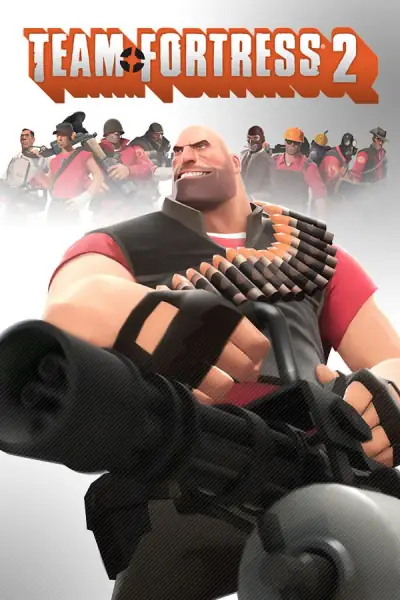 Team Fortress 2 leagues have divisions for new players. ETF2L's newcomer guide says playing there is free, and an invited player can play official matches 24 hours after joining. Its general rules let a player change team only twice in a competition, so check that a mid-season recruit hasn't used both. ETF2L's 6v6 Season 52 offers a Fresh division for players new to 6v6, closed to anyone with more than ten ETF2L Open matches, if enough teams sign up. In North America, RGL's Sixes rules make the Newcomer and Amateur divisions free and charge from Intermediate up, and RGL's global rules keep Newcomer for players entirely new to competitive TF2.
Team Fortress 2 players and groups on TeamTavern
Find scrim partners
Scrims come from other captains. A scrim is a practice match that two teams arrange between themselves, so keep a short list of teams near your level and a fixed slot to play them in.
Many of those captains are on TeamTavern: more than half of League of Legends, Dota 2 and Counter-Strike 2 group posts tick "Scrims and tournaments" under "Looking for". Show only the group posts that tick it, and message the teams near your rank.
Agree on the details before the scrim, not in the lobby:
- the map or maps, and how many rounds or games
- who hosts the server or lobby, and in which region
- the start time, with the time zone
Then ask the same teams back. Regular partners save you the search each week, and a team that starts and finishes on time gets asked again.
Keep the roster together
Players leave when they stop believing in the team. The review of 92 studies on esports teams found that low commitment and low viability, a team's capacity to keep performing over time, can increase players' intention to leave, while cohesion goes with better cooperation, performance and satisfaction. A captain can do a few things about both:
- Keep a sub or two. Premier takes up to seven players, the ALGS a fourth, OWCS eight and RGL Sixes twelve, so every format leaves room for a missed night.
- Split the jobs. Premier has two already: the owner, who holds the team, and a captain, who can also invite and remove players. Do the same in any game: one player runs the roster and registration, another books the scrims.
- Write it down. A short shared note of who decides what, and how someone leaves, isn't a contract, but it saves the argument.
- Change the roster before the lock. Most formats in the table have a point after which a change costs something. Make your changes before it.
When to go looking for a pro path
Climb your format's own divisions first. The join guide names the ladder from amateur to pro for each game, and how few teams go up it each year.
Frequently asked questions
How many players do you need to start an esports team?
Five to play in most games, three in Apex Legends, and six or nine in Team Fortress 2. Keep one or two more as subs: Premier allows up to seven players, and RGL Sixes up to twelve. You don't need them all to start: a group post says how many players you have and how many you want.
How much does it cost to run an amateur team?
It depends on the format:
- Clash needs a ticket from every player, which can be bought with Blue Essence, the currency the game gives for playing.
- ESEA needs an ESEA League Pass for each player.
- The Battle Cup is free with Dota Plus; anyone else buys a ticket.
- Siege Cup needs a paid edition of Siege, not free access.
- ETF2L is free, and so are RGL's Newcomer and Amateur divisions. RGL charges from Intermediate up.
Beyond that, a team needs a voice server, and a free one is enough.
Do you need a high rank to start a team?
No. Premier and Clash place a team by its players' ranks, so a team of low-ranked players plays other low-ranked teams. Rank gates appear only near the top: Blizzard's OWCS FAQ requires Masters 1 for the 2026 open qualifier and sets no rank limit for the FACEIT leagues below it.
Should an amateur team have a written agreement?
A shared note is enough for most teams: who makes the calls, who decides who plays, how any prize money is split and how someone leaves. Writing it down before it matters keeps an argument from ending the team. It isn't legal advice, and a team playing for real money should get some.
Where do I find players for my team?
Put up a group post that names the roles you're missing, then message the player posts that fit. Players have posted about ten times as often as groups on TeamTavern, so a captain has plenty to ask. The busiest feeds are Valorant, League of Legends, Dota 2 and Overwatch.
Post your team
- Decide the format, the night and the rank range first.
- Name the roles you're missing, and message the players who fit.
- Try every candidate the same way, in a real scrim.
- Learn your format's roster rules before your first match.
- Write down who decides what, and how someone leaves.
Post your team from your game's feed: Valorant, League of Legends, Dota 2 and Overwatch are the busiest. Every other game is on the home page.